

Move Like Water
February 4, 2026
Mary MacGill built a cult jewelry brand and lifestyle studio by prioritizing place, people, and long-term relationships over trends and transactions. Her lessons offer a smarter playbook for brands heading into 2026.
Have you noticed the $78 billion U.S. jewelry industry is having a bit of an identity crisis?
Mass-market giants like Signet—the corporate parent of brands like Kay, Zales, and Jared—have been sliding for years, with sales down 7% in 2025. Luxury, meanwhile, continues to grow. The takeaway isn’t that people have stopped buying jewelry. It’s that they’ve stopped buying noise.
Enter Mary MacGill.
In an environment optimized for scale, speed, and seasonal urgency, MacGill has orchestrated an entire world orbiting around a product. Her jewelry is meant to be lived in. Returned to. Revered. That restraint has earned her a cult following (and coverage from the holy trinity of Vogue, WWD, and The New York Times) without sacrificing creative control or commercial viability.
“As a brand, you want to be part of their life,” Mary tells BEST, “not just the retailer they use.”
Here are the top 5 takeaways we can’t stop thinking about from a wide-ranging convo with the founder, as she upends the marketing playbook.
Culture Is a Place
The Mary MacGill brand isn’t in a place. It is the place.
It began on Block Island, Rhode Island—childhood summers, farmers market tables, salt air, soft grasses—and now lives year-round in the Hudson Valley, where her Germantown studio anchors the business. These locations aren’t branding backdrops. They’re cultural codes.
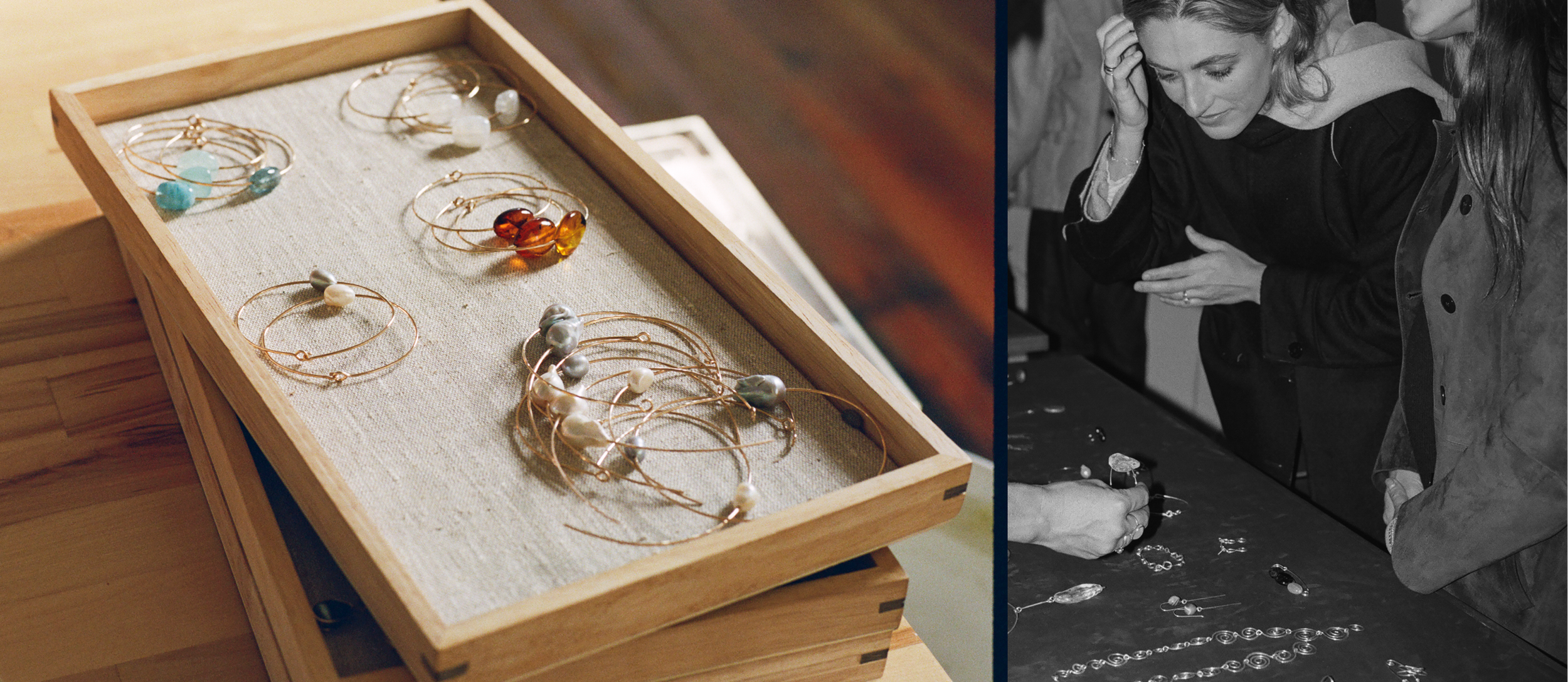
“Place and community become something competitors and big brands can’t simply produce ,” MacGill says. Long-term employees with shared values, local customers, and repeat visitors create continuity no campaign can manufacture. By rooting the brand in real communities instead of highly trafficked, affluent destinations, she lets connection—not traditional marketing—do the talking.
“People advised against setting up my business in lesser known locations and said, ‘why don't you open a store in NYC or the Hamptons?,” she recalls. “Because it doesn’t resonate with me. And in terms of creating and eventually translating a culture, for me, place and the community shaped by it are the most important.”
Protect the Core, Fund the Vision
“Make it for you, not the algorithm,” MacGill says.
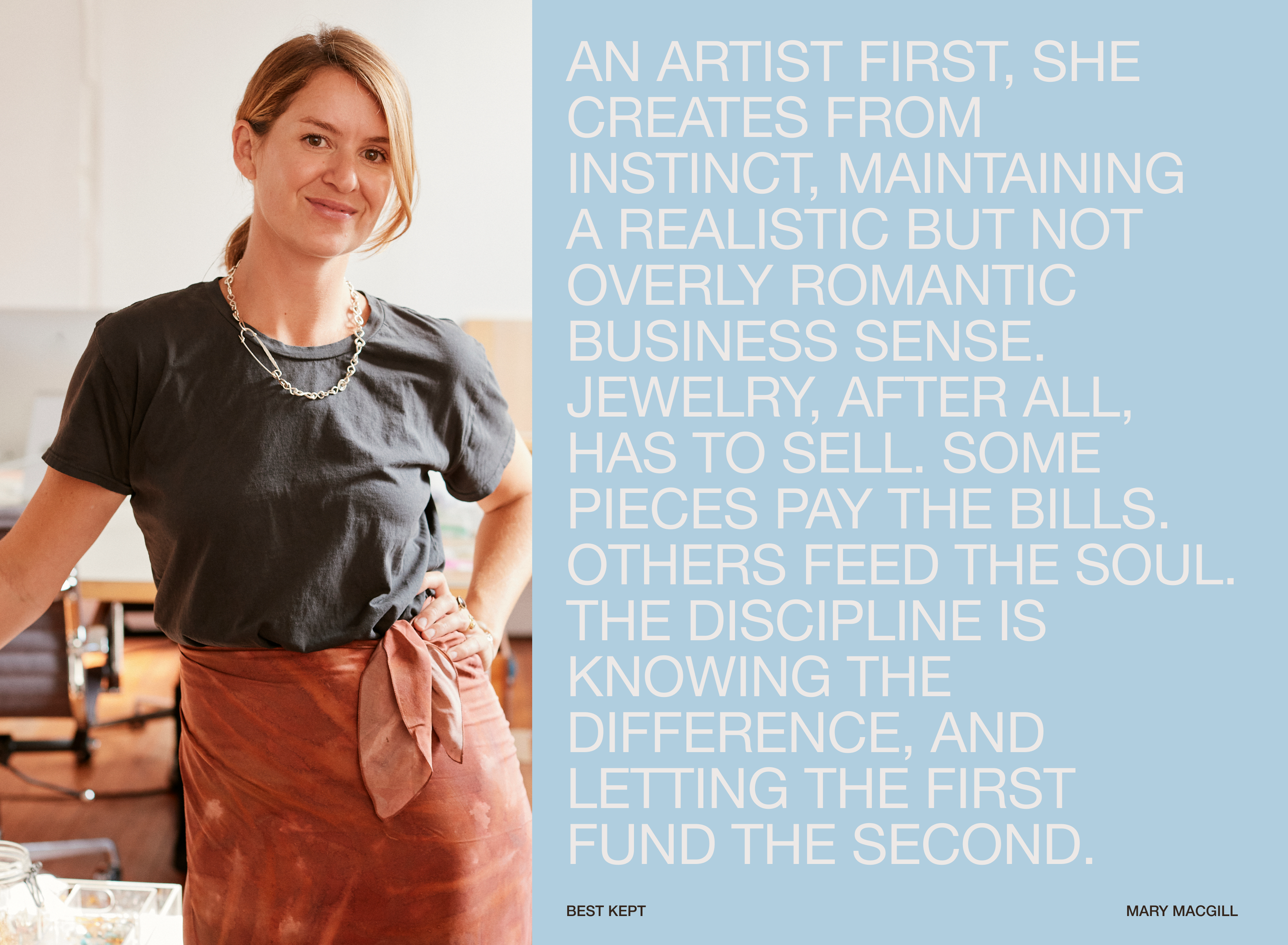
Her core line— including $95 studs that haven’t increased in price even as gold and raw material costs climb—provides stability without flattening the brand. “Figuring out what those pieces are that are sort of timeless, that you can sell over and over again, allows you the freedom to experiment more,” she explains.
Behind the scenes, MacGill uses AI pragmatically: pricing alerts tied to gold markets, comparative analysis, future mockups. “We’re using AI to do unsexy but critical work,” she says. “Meanwhile, the brand voice, handmade process, and relationship-building stay human.” That approach relieves creative pressure.
The Best Brands Think in Lifetimes
“You want to be there as people are living their lives, celebrating big decisions, finding their way, passing values down” MacGill doesn’t design for one-off purchases. She designs for progression.
It sounds whimsical. It’s actually strategic.
Customers move up categories not because they’re pushed, but because they grow alongside the brand. They’re living in the brand world. The jewelry becomes part of their personal history.
MacGill extends that philosophy beyond just product to seasonal marketing pushes. “Gift guides are everywhere, and they all start to look the same,” she says. Instead, she invests in founder-driven, non-transactional storytelling—like a 2025 travel guide created for top clients designed to deepen the relationship rather than drive instant sales.
Be part of the audiences’ life, not just the vendor they use. “In 2026, ‘high-touch’ is no longer a cute add-on,” MacGill says. “It’s a strategy.”
Gatekeeping Stifles Great Work
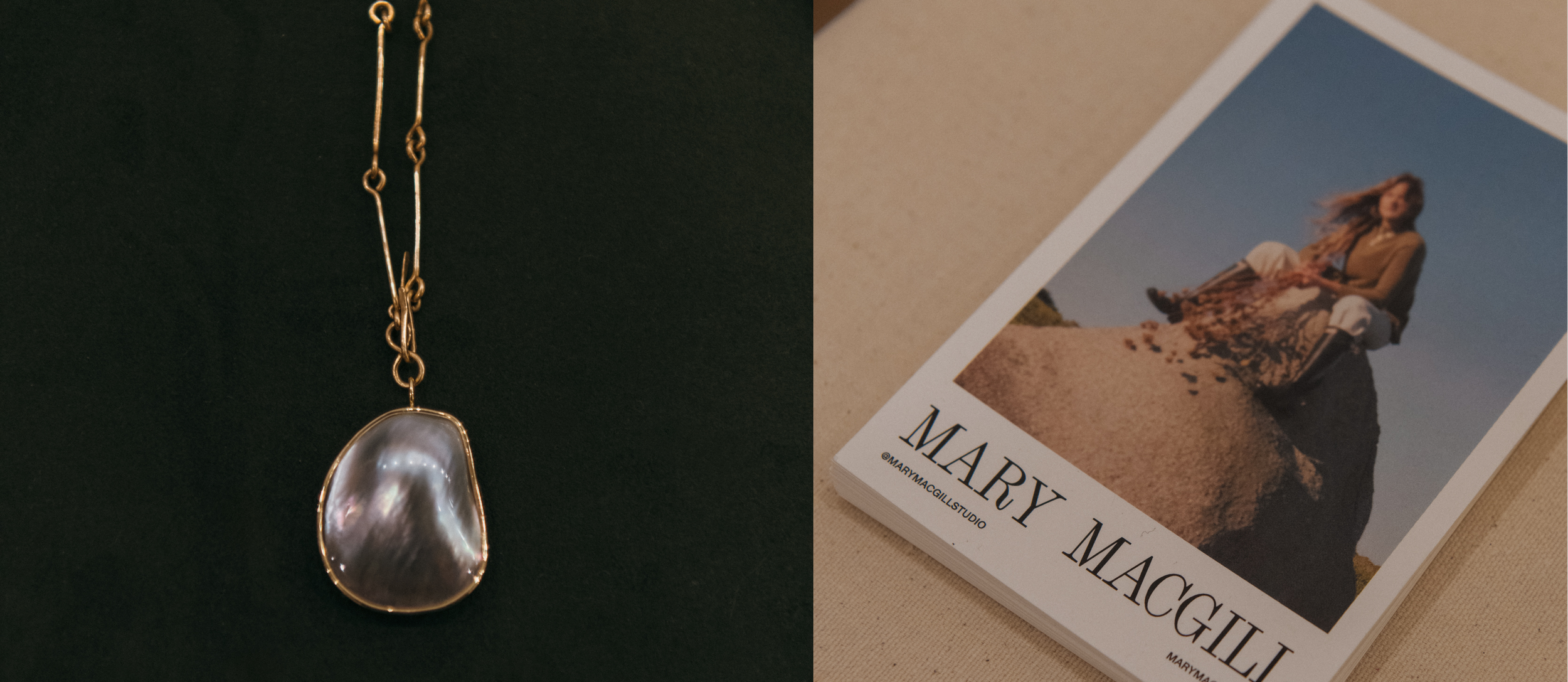
By Hand & Many Hands is one of the brand’s pillars—and it’s not lip service.
MacGill is explicit that her work isn’t a solo performance. She credits her longtime team, mentors like Kaziko Oshima, her mother, photographer Susan Paulsen, Susan Sellers of 2x4, and collaborative stylists and photographers that present unique takes on the brand like Jenna Saraco, Christy Rappold, Matthew Johnson, Celeste Sloman, Lisa Pryzstup, and Em McCann Zander.
Ownership may be currency for most brands. For MacGill, collaboration is a growth lever.
“It’s about the value of the investment,” she adds. “Collaboration brings more eyes to the table and you’re more accessible to different audiences. The work is better because it’s not a singular perspective.”
Control, especially on creative sets, is easy to let go of, she says, when you hire for taste. “I want to work with people because they do a great job and they’re interesting,” she says. “I don’t want to turn [their work] into ours.”
Your BTS Energy is Your FOH Magnetism
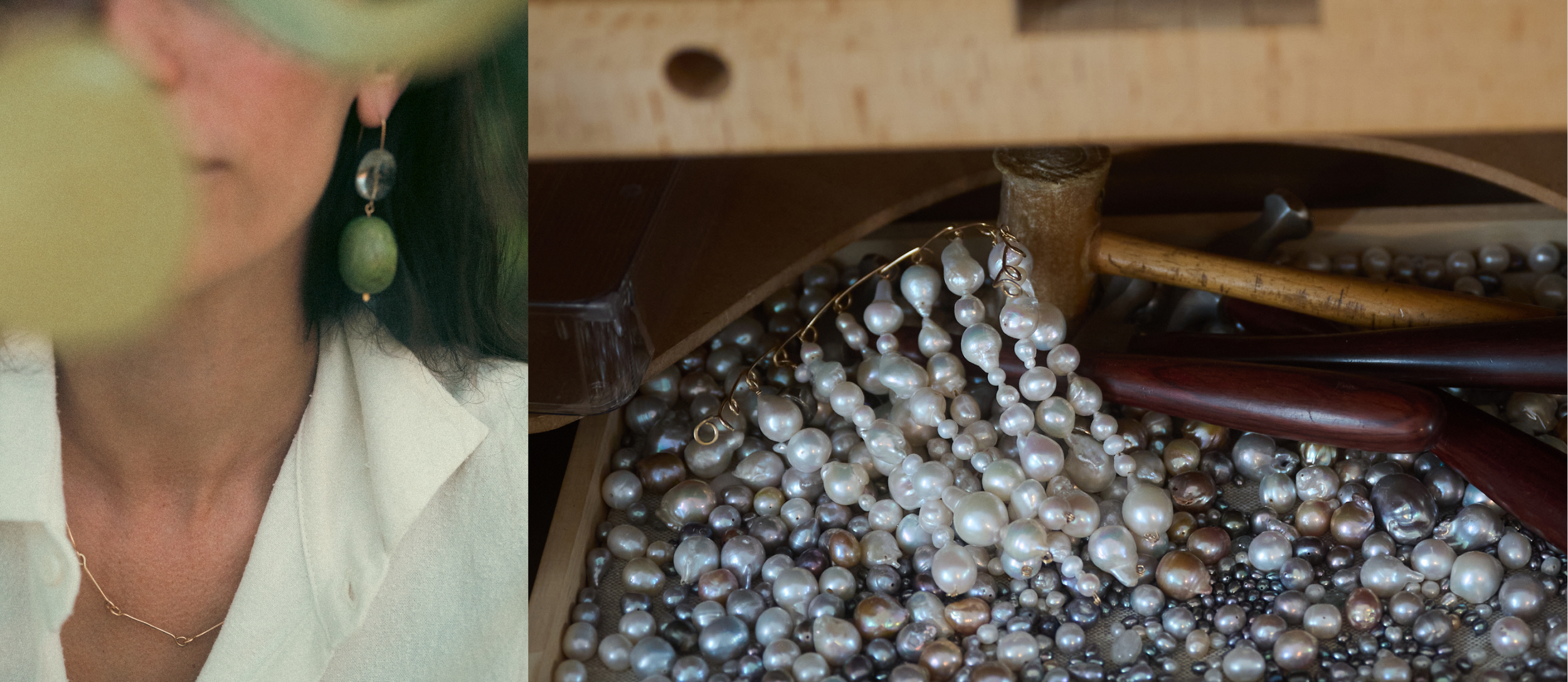
MacGill runs a precise operation by design. Favoring clarity over chaos (“It’s just jewelry!"), and timing over volume, the studio is able to ramp up marketing ahead of peak demand, protecting slower months for experimentation. The result is agility without burnout.
She builds the business with her team in mind, trusting designers and sales associates as partners, not just an operating expense. “My goal right now is to set up a little summit with the women who have been with me the longest, and ask them where they think the brand should be going,” she says. Their perspective shapes decisions early.
That trust defines the employee experience—and customers feel it immediately.
What happens behind the scenes shows up out front: calm confidence, genuine warmth, and a brand that feels human because it is.
Follow Mary MacGill on Instagram.
Buy yourself a little treat on MaryMacGill.com.
This month's interview and article by Lindsay Alexander. If you need a brand world, just ask.
